
BLOG POSTS
Categories
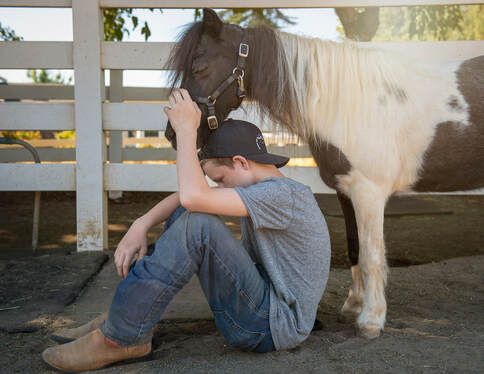
When you walk up to a 1,000-pound horse, something quiet happens. The horse stretches its neck, rests its soft nose near your shoulder, and exhales a slow, warm breath. In equine therapy circles, this gentle moment of connection is affectionately called a "snuzzle."
It feels comforting, but there is far more going on than just a sweet interaction. Science shows that horses possess a unique physiological and emotional capacity to help humans process stress, regulate emotions, and overcome trauma.
If you are exploring alternative mental health approaches, understanding how horses facilitate healing can open the door to a powerful new journey. Here is the breakdown of why equine-assisted therapy works so effectively, and why horses make such incredible therapy partners.
1. The Instinct of a Prey Animal
Unlike dogs or cats, which are predators, horses are prey animals. In the wild, their survival relies entirely on an extraordinary sensitivity to their environment. They constantly scan for subtle changes in body language, muscle tension, energy, and breathing.
Because of this heightened awareness, horses are experts at reading non-verbal communication. They can sense human emotions before we even consciously acknowledge them. If you walk into an arena feeling anxious while trying to put on a brave face, a horse recognizes the internal tension instantly.
2. The Emotional Mirror
In talk therapy, it can be difficult to put feelings into words. Horses bridge this gap through immediate, non-judgmental feedback, a concept known as emotional mirroring.
- When you feel anxious or scattered: The horse may become restless, set boundaries, or step away.
- When you take a deep breath and settle: The horse will often drop its head, chew, or step closer, signaling that it feels safe around you.
Horses do not care about your past, your credentials, or what you say. They react entirely to your present energy. This immediate reaction acts as an honest mirror, helping individuals realize when they are holding onto unexpressed anger, fear, or stress.
3. Heart Rate Coherence and Nervous System Regulation
The soothing effect of being near a horse isn't just in your head, it is in your heart.
A horse’s heart is significantly larger than a human's and beats at a slower, steadier rate. Studies indicate that when humans spend time close to a horse, our heart rate variability (HRV) and nervous system begin to synchronize with the horse’s calm physiological state.
This heart-rate coherence triggers a physiological response:
- Decreased heart rate and blood pressure
- Lower levels of cortisol (the body’s main stress hormone)
- Increased production of feeling-good endorphins like oxytocin
For individuals struggling with hypervigilance, panic, or PTSD, stepping into a horse's calm energy grounds the nervous system in a way that words rarely can.
4. Building Trust Without Pressure
Traditional talk therapy can sometimes feel intimidating, especially for youth, veterans, or survivors of trauma. Horses offer a completely non-judgmental partnership. They do not demand explanations or demand that you "fix" yourself immediately.
In a ground-based equine therapy setting, trust is earned through simple, intentional actions, like grooming, leading, or simply standing together in quiet connection. Learning to communicate clearly with a giant animal builds genuine self-confidence, healthy boundaries, and self-awareness that carries directly into daily human relationships.
Experience the Healing Power of Horses
The "snuzzle" is just the beginning. Whether you are dealing with burnout, seeking help for anxiety, or looking for specialized trauma recovery, equine-assisted therapy provides an experiential path toward lasting emotional balance.
Every day at Hearts Landing Ranch, we watch these quiet moments unfold. A rescued horse lowers its head, a veteran takes their first deep breath in weeks, or a teenager who has struggled to trust anyone smiles as a horse chooses to step closer. Healing rarely begins with dramatic breakthroughs. More often, it begins with something as simple as a gentle snuzzle.
The "snuzzle" is just the beginning. Whether you are dealing with burnout, seeking help for anxiety, or looking for specialized trauma recovery, equine-assisted therapy provides an experiential path toward lasting emotional balance.
Every day at Hearts Landing Ranch, we watch these quiet moments unfold. A rescued horse lowers its head, a veteran takes their first deep breath in weeks, or a teenager who has struggled to trust anyone smiles as a horse chooses to step closer. Healing rarely begins with dramatic breakthroughs. More often, it begins with something as simple as a gentle snuzzle.
July 28, 2026